Privilege handling is part of the product's design
A consequence: AI meeting recaps cost counsel privilege safeguards
A New York City ethics opinion treats AI meeting recaps as business records and calls for meeting-level controls.
Assembled by AI Law Firm News Desk.
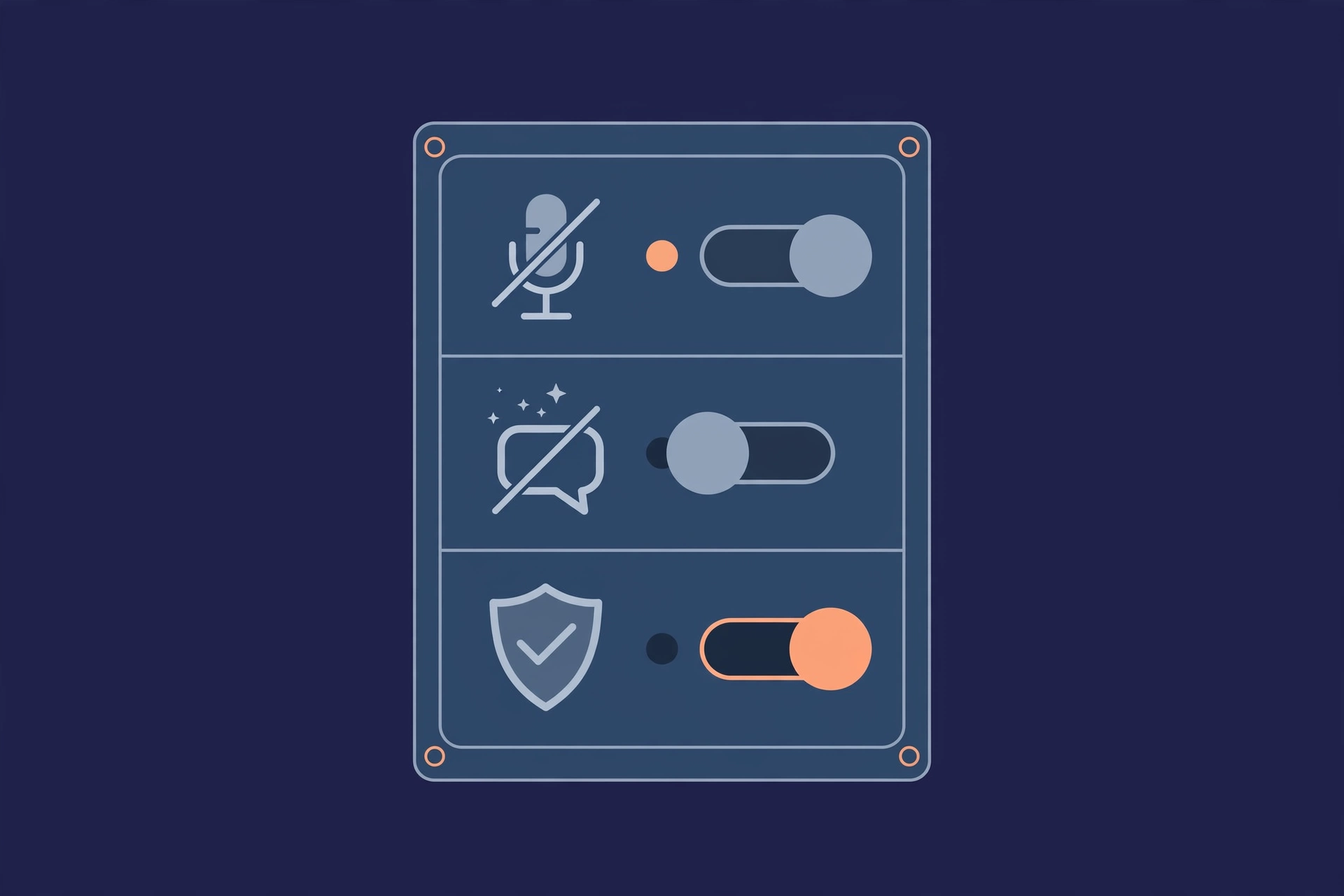
On September 30, 2026, Law360 Legal Industry reported that the New York City Bar Association had issued an ethics opinion cautioning attorneys not to record nonclient conversations with artificial intelligence tools. The opinion treats AI meeting recaps as a distinct business-record category and says counsel should set controls at the meeting level and update broader operating frameworks, according to Law360 Legal Industry. William Wright at Faegre Drinker is identified in the report as describing the opinion as part of an emerging view about those risks.
The consequence is not that AI makes legal work impossible. It is that the product has to account for how information is captured, distributed and retained. Privilege handling is part of the service’s design, not a security feature added after an AI workflow is built. The Solicitors Regulation Authority reports 42 reports on potential misuse of AI and says the cases include inaccurate information and client confidentiality. That combination makes the New York City opinion commercially important for any AI-native legal service: a recap can create a new artifact whose treatment has to be decided as part of the workflow.
The opinion does not establish that every AI-generated recap loses privilege, or that recording a conversation automatically destroys a legal protection. It establishes a narrower point: the New York City Bar Association sees recording nonclient conversations with AI as a distinct ethics problem and expects controls at the meeting level. The stronger reading would require a specific finding about the legal relationship, the purpose of a communication, the confidentiality arrangements and the handling of the resulting data. Those facts are not supplied here. Neither the broad warning that AI destroys privilege nor the opposite assumption that a legal chatbot makes everything privileged is an adequate operating rule.
The accountability problem remains alongside the privilege problem. Legal Futures says AI can do the work but cannot inherit the lawyer’s duty, asking what happens when lawyers delegate cognitive work while remaining personally responsible for judgments they may no longer have independently reasoned through. An AI-native firm therefore cannot treat a recap as a neutral convenience. It must specify who controls the recording, what is captured, where it goes, who can access it and how the resulting record is used. The New York City opinion does not answer those operational questions, but it makes clear that they belong inside the service rather than outside it.
The next confirming fact would be a published New York City Bar Association opinion, court order or firm policy that addresses the treatment of AI meeting recaps in a defined setting, including whether the communication was with a client, why it was recorded, who received the recap and how long it was kept. A policy that applies controls at the meeting level would support the service-design reading. A finding that treats every recap alike, without regard to the legal relationship or the handling of data, would cut against it. We will watch for that distinction because privilege is decided by the service’s design, not by the presence of AI alone.
News and analysis, not legal advice.
Sources
- AI Meeting Recaps Pose New Discovery And Privilege Risks Law360 Legal Industry
- AI can do the work but it cannot inherit the lawyer’s duty Legal Futures